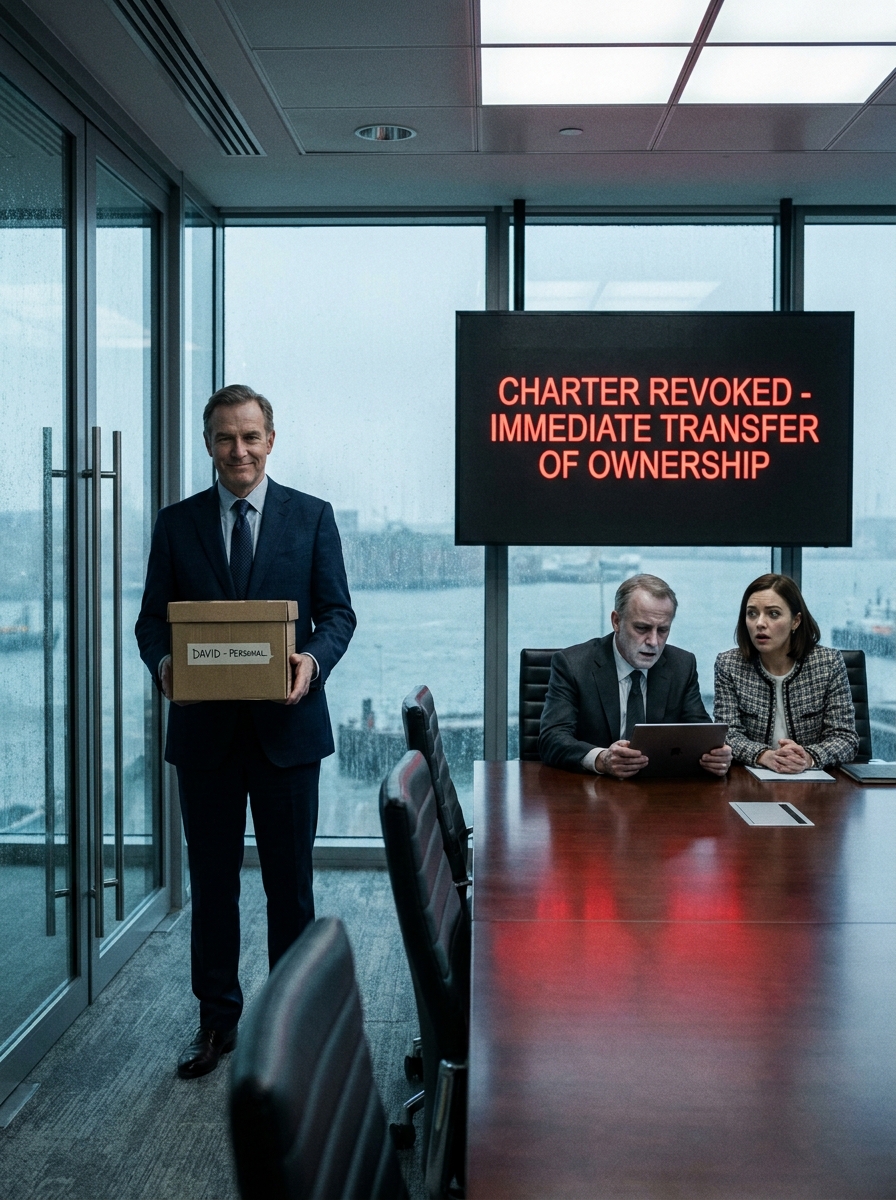
“The paperwork is already processing, David. I am sending the official notification to the Securities and Exchange Commission and their primary lenders now. By noon, their credit lines will lock.”
I hung up the phone and drove home to Clara.
She was waiting for me in the kitchen of our modest two-bedroom home in Stamford, holding a warm cup of coffee.
“Is it done?” she asked, wrapping her arms around my neck.
“It’s done,” I whispered against her shoulder.
To the world, I was just David Miller, the quiet head of research and development who had spent twelve years working sixty-hour weeks in the Sterling labs.
But Richard Sterling had forgotten the history of his own company.
Twelve years ago, Sterling Energy was on the verge of bankruptcy, operating out of a damp warehouse in Bridgeport.
My late father, Henry Miller, was the brilliant chemist who invented the proprietary molecular filtration system that made the company’s clean-fuel transition possible.
When Richard bought into the company, my father signed over the operational rights, but he kept the core patents under our family trust, the Miller Patent Group.
The licensing agreement had a very specific, ironclad clause written by my father’s attorneys.
The license was granted to Sterling Energy at a heavily discounted rate of one dollar per year, under the condition that I, David Miller, remained employed as the Chief Technology Officer or Head of R&D with full veto power over technical decisions.
If I was ever terminated from the company for any reason other than documented felony theft, the patent license would immediately revoke.
Furthermore, all rights to use the molecular filtration technology would instantly revert to the Miller Patent Group.
Without that technology, every single one of Sterling’s active clean-fuel refineries in Texas, Ohio, and New York would be operating illegally.
At 12:15 p.m., my phone began to vibrate on the kitchen counter.
It was a junior secretary from Sterling Energy’s compliance department. I did not answer.
At 12:45 p.m., the calls started coming from the board members.
First was Arthur Pendelton, the senior board member who had sat in silence during my humiliation.
I let it go to voicemail.
By 1:30 p.m., Richard Sterling himself was calling my personal cell phone.
I declined the call and watched the rain hit the kitchen window.
I turned on the television to the business news network.
By 2:00 p.m., the news tickers were running the story.
“Sterling Energy shares plunge 34% following suspension of operations at major refining facilities due to patent dispute.”
A reporter stood outside the Greenwich headquarters, speaking rapidly into her microphone about a sudden emergency injunction filed in federal court.
At 2:45 p.m., a black Mercedes SUV pulled up to my driveway.
Richard Sterling stepped out into the rain, not bothering with an umbrella.
His expensive silk tie was crooked, and his hair was plastered to his forehead.
Chloe followed him, her designer boots splashing in the puddles, her face pale and stripped of its smugness.
I walked to the front door and opened it just as Richard reached the porch.
“David,” Richard gasped, his chest heaving. “We need to talk. There has been a massive misunderstanding.”
I leaned against the doorframe, keeping my hands in my pockets.
“There is no misunderstanding, Richard. You fired me at 10:14 this morning.”
“It was a negotiation tactic!” Richard yelled, his voice cracking. “The board was putting pressure on me. We can reinstate you immediately. We will double your salary. We will give you stock options!”
Chloe stepped forward, her voice trembling.
“David, please. I was just upset the other night. I didn’t mean what I said. We can work together. I’ll make sure you have whatever you want.”
I looked at Chloe, then back to Richard.
“My father warned me that you would try to strip the assets once you thought you were big enough,” I said quietly. “That’s why he wrote the contract the way he did.”
“David, please,” Richard pleaded, hands shaking. “The bank has frozen our operating capital. If we don’t start the refineries by tomorrow morning, the default penalties will liquidate the entire company. We will lose everything.”
“You will lose everything,” I corrected him. “The Miller Patent Group is already preparing to license the technology to your primary competitor, Apex Energy, at 9:00 a.m. tomorrow.”
Richard looked as if he had been struck. He grabbed the wooden railing of the porch to steady himself.
“You can’t do this,” he whispered. “We built this company.”
“I built this company,” I said. “You just collected the profits.”
I shut the door quietly and turned the lock.
Through the frosted glass, I watched them stand on the porch in the rain for three minutes before they slowly walked back to their vehicle.
Three weeks later, Sterling Energy filed for Chapter 11 bankruptcy.
The board fired Richard Sterling and stripped him of his remaining stock to cover the outstanding debts.
Chloe’s lavish lifestyle evaporated as their family assets were seized during the liquidation process.
Apex Energy purchased the refinery assets for pennies on the dollar, integrating my family’s technology into their global network.
I accepted a position as the principal technical partner at Apex, working from a quiet, sunlit office overlooking the harbor in Stamford.
Every morning, I sit out on the balcony with my coffee, watching the boats go by, enjoying the quiet life I built with my own hands.
Who doesn’t love a creamy, indulgent slice of cheesecake? Now imagine all that goodness in a convenient, no-bake form, combined with the sweetness of fresh […]