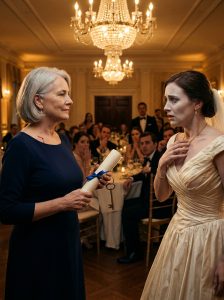
I didn’t answer Brielle. I simply walked to the fireplace, where Eleanor’s attorney, Mr. Ainsworth, was nursing a cup of tea he hadn’t touched. I gave him the smallest nod. He set the cup down and cleared his throat. The room slowly hushed, the way a room does when a man in a gray suit pulls a folder from a leather briefcase.
“Per Eleanor Cartwright’s final will,” he began, “executed and notarized fourteen months ago, and updated six weeks before her passing — the Linden Street house, all interior contents, and the trust funding its upkeep are bequeathed in full to Margaret Lowell, in recognition of her care, devotion, and the promises kept when others were absent.”
The champagne glass in Brielle’s hand tilted. A thin gold line spilled onto the rug she’d been mentally re-carpeting.
“That’s a mistake,” she snapped. “Eleanor wasn’t in her right mind. I’ll contest it.”
Mr. Ainsworth didn’t blink. “Eleanor anticipated that. She recorded a video statement with two physicians present, confirming capacity. She also included a no-contest clause. Any heir who challenges the will forfeits the one item she did leave them.”
Brielle’s voice cracked. “And what did she leave me?”
He slid a small velvet box across the side table. Inside was a folded note in Eleanor’s shaky handwriting, and a single porcelain teacup — the chipped one Brielle had once laughed at, calling it “peasant china” at Thanksgiving. The note read: *For Brielle. So you remember what you thought was beneath you.*
The room was so quiet I could hear the grandfather clock in the hall.
I walked over, picked up Eleanor’s worn copy of Yeats from the mantle, and pressed it gently to my chest. Then I turned to Brielle, who was still staring at the teacup like it had bitten her.
“You can show yourself out,” I said softly. “The hospice nurse needs to lock up her house.”