The elevator opened on the mezzanine level at 12:19 p.m.
I could hear the string quartet through the ballroom doors. They had looped back to the prelude.
My father was waiting in the corridor in his charcoal suit, white boutonnière, eyes red at the corners the way they always got when he was trying not to show something.
“Baby girl,” he said. “What’s happening?”
“Walk me in, Daddy.”
“Celine, Marcus isn’t at the altar yet.”
“I know.”
He looked at me for a long moment, the way he used to look at me across the dinner table when he was deciding whether to ask a question he already knew the answer to.
Then he offered me his arm.
The doors opened.
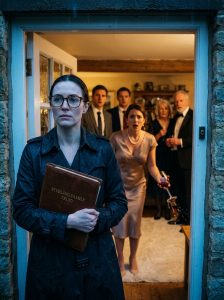
Two hundred people stood.
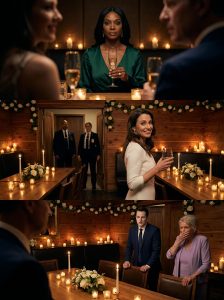
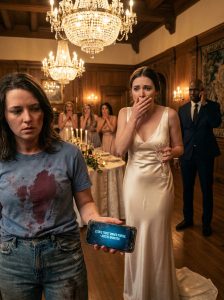
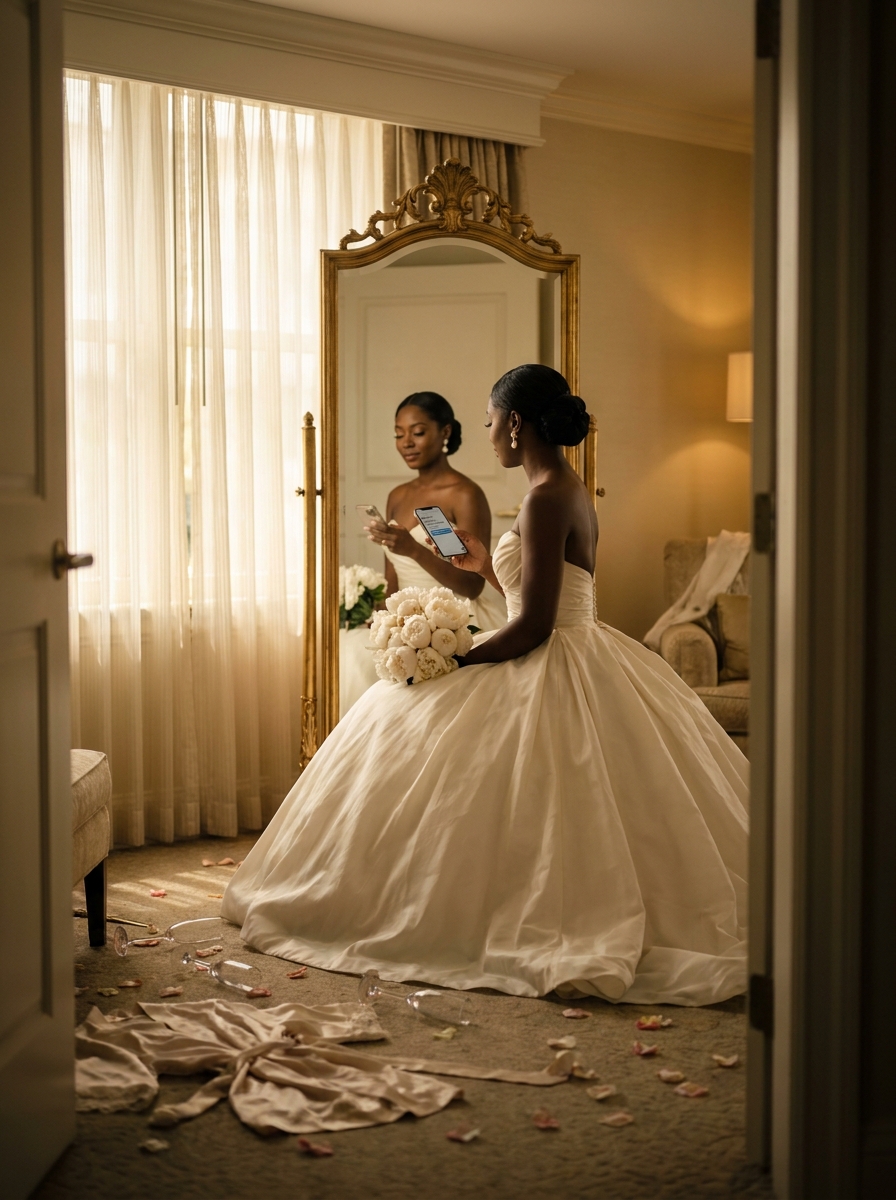
I walked down that aisle in my $6,800 Vera Wang gown with white peonies in my hands and my father’s arm under mine, and I smiled at every single face I passed — aunts, cousins, colleagues, neighbors, his family, my family — and I did not look at the altar until I reached the front.
Marcus was there by then.
He had gotten there thirty seconds ahead of me, bow tie slightly crooked, color high in his face. He looked relieved to see me. He thought I hadn’t gone to the wrong room. He thought it was still his wedding day.
Delanie was in the front row of the bridal party, four feet to my left, holding her bouquet, smiling the smile of a woman who had made a decision and was pretending she hadn’t.
The officiant — Father Broussard, retired, a family friend — began.
“We are gathered here today—”
I raised my hand.
He stopped.
The room went very quiet. The kind of quiet where you can hear the air conditioning.
I turned to face the guests.
“I want to thank everyone for being here today,” I said. “Most of you traveled a long way. The dinner is still happening. The jazz band is still playing. The bar is open.”
I turned to Marcus.
“Patricia Mouton filed this morning,” I said. “You’ve been served. The joint account is frozen. The house contract is void under the fraud clause.”
His face went the color of old chalk.
I turned to Delanie.
She was already crying, but not the happy kind.
“The room charge on Valentine’s Day was sloppy,” I said. “He used the joint renovation card. That’s what accountants do — we follow the money.”
I handed my bouquet to my sister Renata.
I slid the engagement ring off my finger and placed it on the altar cloth.
“Father Broussard,” I said, “I’m so sorry to waste your afternoon.”
“Not wasted, sweetheart,” he said quietly.
I walked back up the aisle.
People moved out of my way. Some of them were crying. His mother had her hand over her mouth. My cousin Desiree started to applaud somewhere in the middle pews and then stopped when no one immediately joined her, and then two seconds later half the room joined her anyway.
I did not look back.
In the corridor, my father put both arms around me and held on.
In the weeks that followed, Patricia’s filing moved quickly.
Marcus had co-mingled documented fraud with our joint finances, which in Louisiana triggers a specific civil remedy. The $22,000 came back. The attorneys’ fees came back. The court also awarded me the earnest money deposit on the Garden District house, which Marcus had paid from our joint account without my written consent on the final contract.
That was another $18,000.
Delanie lost her position at the architecture firm where Marcus was a partner. Human resources determined the relationship had begun while she was working on a firm project, which created a conflict the partners were not willing to absorb. She relocated to Houston by October.
Marcus sold his equity share in the firm at a loss to avoid a longer internal review.
I heard this from mutual friends. I did not follow it closely.
By September I had accepted a senior director role at a forensic consulting group in Austin. The work is good. The city suits me. I have a apartment two blocks from Barton Springs and a dog named after my grandmother.
I did not keep the peonies.
But I kept the Vera Wang.
It is hanging in a garment bag in my closet, and every so often I take it out and look at it and think about what my mother used to say about a lady never letting them see her sweat.
I walked back up that aisle dry-eyed and steady in front of two hundred people with my head up, and not one person in that room saw me sweat.
I think she would have been proud.